
Sundararaman Ramamurthy has been an interesting choice for the publicly-listed BSE, which has seen its chief move to bigger rival -- the National Stock Exchange (NSE) -- in July. Having spent nearly two decades at the country's largest bourse, Ramamurthy is among the early architects of NSE and understands all the cogs of the exchange wheel like only a few others in the country. Just like NSE's core team, which includes its founder RH Patil, the 59-year-old Ramamurthy has worked at the Industrial Development Bank of India (IDBI) before moving to NSE in 1995.

In a move that would benefit retail investors, the National Stock Exchange on Monday said the transaction charges would be lower by about 10 per cent in cash and derivatives segments but would levy system abuse charges in the Futures & Options category from October 1.


Stock market regulator Securities & Exchange Board of India (Sebi) has widened the scope of index-based options by allowing exchanges to offer option contracts based on Sensex and Nifty with a tenure of up to five years.

While the BSE is holding a special trading session to test its disaster recovery software, NSE conduct a special live trading session in capital market segment and future options and SLB segments.

Investors are reluctant to take long-term positions this year after the spectacular gains in 2023. The delivery-based trades on the National Stock Exchange (NSE) have declined to below 36 per cent this year from an average of 38.1 per cent in 2023. Investors tend to seek delivery for stocks where they see a long-term investment opportunity or tactical positional trade.

On one hand, Limaye will have to battle legacy issues, while, on the other hand, he will have to ensure that the exchange is able to maintain its leadership position.

The Reserve Bank of India's (RBI's) decision on Wednesday to relax restrictions on banks operating in the International Financial Services Centre (IFSC) related to the repatriation of idle funds in foreign currency accounts (FCA) could give a fillip to trading in foreign stocks at the GIFT City.

Close on heels of the launch of Gift Nifty (earlier SGX Nifty), domestic exchanges are pushing for extension of trading hours for the onshore derivatives market, said sources. Bourses are waiting for a final approval from market regulator Sebi on the proposal to keep the derivatives market open for longer hours, they said. The move is aimed at attracting more trading members for onshore futures and options (F&O) contracts amid risk that global investors could prefer trading at Gift City given the tax benefits.

The Securities and Exchange Board of India (Sebi) has introduced an optional T+1 settlement cycle for the markets. T+1 means that settlements will have to be cleared within one day of the actual transactions taking place. The regulator has put the onus on the stock exchanges to decide whether they want to opt for the shorter settlement cycle for any of the listed scrips. This can be done after giving a one-month prior notice to all stakeholders.

Heightened volatility and lacklustre returns continue to make a dent in retail participation in the equities cash market segment. The percentage of retail participation in the average daily turnover in the National Stock Exchange's (NSE's) cash segment has come down to 40.8 per cent in February 2023, from 52 per cent a year ago. At the peak, retail investors accounted for nearly two-thirds of cash market volumes in July 2020.

Rupee-denominated contracts will be traded from 9 am to 5 pm.

Exchanges have twin roles: commercial and regulatory.

While MCX-SX is still waiting for regulatory approval to host equity trading, BSE has been struggling to maintain its 30 per cent market share in the cash segment.

Investors may have to wait a little longer for Unified Payments Interface (UPI)-based block mechanism in the secondary market even as the market regulator has set the effective launch date as January 1, 2024. Several brokerage firms said they may take a few months more to implement it. Investors will be able to register for this facility only if the stock broker has opted for the UPI block facility.

The regulator is unhappy with the exchange in the market crash case that occurred in 2012.
The New York Stock Exchange, which has five per cent stake each in NSE and MCX, is keen to increase its holding further as and when Indian regulator relax rules, NYSE CEO Duncan L Niederauer said on Thursday.As per the current regulations a foreign entity cannot purchase more than five per cent stake in the country's stock exchanges.

Culver Max Entertainment, formerly known as Sony Pictures Networks India (SPNI), has terminated merger agreements with Zee Entertainment, which could have otherwise created a USD 10 billion media enterprise in the country.

The index options also touched a record high of Rs 4.9 lakh crore.

Cash trading volume declined in 2022, even as benchmark indices outperformed their peers. The average daily trading volume (ADTV) for the cash segment fell 18 per cent year-on-year to Rs 61,392 crore (NSE and BSE combined). The ADTV for the futures and options (F&O) segment (NSE and BSE combined) stood at Rs 125 trillion (notional turnover), up 117 per cent from the previous year.

Commodity investments can help you diversify your portfolio in asset classes other than equity and debt, says Dwaipayan Bose.

'The stockbroker should have a good balance sheet to support its scale of operations. It should also have proper risk management in terms of margins so that it doesn't go bankrupt during extreme market movements.' 'The broker must have a track record of navigating several market cycles in an ethical and transparent manner.'

Mihir Tanna, Associate Director, S K Patodia & Associates, will answer your personal income tax queries.
The National Stock Exchange will suspend trading operations in capital market and futures and options segment for 35 minutes (11.30 hrs to 12.05 hrs) from September 25 to October 9, 2003 due to sun outage.

'It is like a chicken-and-egg situation.' 'All these product tweaks are innovative, but traders won't move unless there is liquidity.' 'And liquidity cannot be generated until traders move.'

The National Stock Exchange (NSE) Nifty Next 50 Index could undergo large-scale changes if the proposed tweaks to its computation methodology get implemented. In a discussion paper floated recently, NSE Indices, which owns and manages a portfolio of over 350 indices under the Nifty brand, proposed that only stocks that are traded in the futures and options (F&O) segment can be part of the index. Currently, as many as 11 non-F&O stocks are part of the Nifty Next 50 Index, which, as the name suggests, represents the next rung of large and liquid securities after the Nifty50.

The broking industry's pecking order is set to change with Groww, a fin-tech startup from Bengaluru, poised to topple the industry's poster boy, Zerodha, as the leading brokerage in the number of active investors. According to data provided by the portal Topsharebrokers.com, Zerodha has 6.32 million active investors, while Groww is at 5.99 million. It is projected that Groww, which has grown at a much faster clip over the past two years, will surpass Zerodha this month, or next month.

The rout in Adani Group stocks after US-based short seller Hindenburg Research released a report on January 24 has sparked a rebound in trading activity this month. The average daily trading volume (ADTV) for the cash segment (both NSE and BSE combined) so far in February stands at Rs 59,346 crore, and is around 15 per cent more than the previous month's tally of Rs 51,844 crore, which was the lowest in six months. The ADTV for the futures and options (F&O) segment rose to a record Rs 204 trillion (notional turnover) against Rs 202 trillion in January.
You could exit on completion of your set target or on spurt in the stock price.

The Sensex came under fag-end selling pressure to close in the red for the sixth straight session on Friday as risk-off sentiment prevailed amid unabated selling by foreign institutional investors and concerns over inflation. The 30-share BSE benchmark pared all intra-day gains and declined 136.69 points or 0.26 per cent to end at 52,793.62. During the day, it had rallied 855.4 points or 1.61 per cent to 53,785.71. On similar lines, the broader NSE Nifty dipped 25.85 points or 0.16 per cent to settle at 15,782.15.

Catamaran, the family office of Infosys founder Narayana Murthy, is targeting 15 per cent returns on its portfolio investments per annum as it shifts focus from early-stage investments to growth and late-stage bets. This would double the firm's assets under management (AUM) from the current $1 billion to $2 billion over the next five years. "For direct investments, we are focusing on growth-stage investments and very selectively on early stage," Deepak Padaki, president, Catamaran, told Business Standard. "(This is) primarily because the early-stage space in India, in the last three-four years, has completely changed. "There has been a huge influx of capital in the last two years. It has become a very crowded space for early-stage investment," he said.
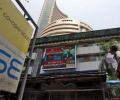
TCS was the top gainer in the Sensex pack, rising over 1 per cent, followed by Infosys, Reliance Industries, HUL, Nestle India and ITC. NSE Nifty ended 10.05 points higher at its new closing record of 16,634.65.

Among the Sensex firms, Bajaj Finance emerged as the biggest gainer by climbing 2.95 per cent. Tata Motors, Bajaj Finserv, IndusInd Bank, Sun Pharma, Mahindra & Mahindra, State Bank of India, Larsen & Toubro, HDFC, HDFC Bank, Maruti, Reliance Industries and Bharti Airtel were the other major winners. HCL Technologies, Axis Bank, ICICI Bank, Tech Mahindra and Titan were among the laggards.
The National Stock Exchange has launched a volatility index reflecting the market's expectation of volatility over the near term, which is the next 30 day period. From the best bid-ask price of Nifty 50 Options contracts, a volatility figure (percentage) is calculated, which indicates the expected market volatility over the next 30 days. Higher the implied volatility, higher the India VIX. Implied volatility refers to the implied risks associated with the stock markets.

The three year lock-in period enables ELSS fund managers to invest in high conviction stocks for a long period of time because of relatively less redemption pressure, says Dwaipayan Bose

The RBI's financial stability report has on Wednesday highlighted the disconnect between the real economy and equity market yet again. The central bank observed that Indian equities were trading at rich valuations, with several metrics such as price to earnings multiples, price to book ratio, market cap to GDP and the cyclically adjusted P/E ratio, or Shiller P/E, at above historical averages. For instance, as on December 13, the one-year forward P/E ratio for India was 35.1 per cent, above its 10-year average, and one of the highest in the world.

The first tranche of sovereign gold bond for 2022-23 will open for subscription for five days from June 20, the Reserve Bank of India said on Thursday.

Gold, the safest haven amid the ongoing uncertainty, also emerged as one of the most lucrative investment options in financial year 2022-23 with an impressive return of 16.1 per cent in rupee terms, and 2.3 per cent returns in dollars. And, had it not been for the very high inflow of smuggled gold and the huge discount prevailing in the market due to high prices, the returns in gold would have been much higher, analysts said. The precious metal has consistently been delivering positive returns in India since 2016.
 © 2026 Rediff.com - Investor Information - Advertise with us - Disclaimer - Privacy Policy - Sitemap - Feedback - About us - Terms of use - Grievances